Coq au Vin Blanc
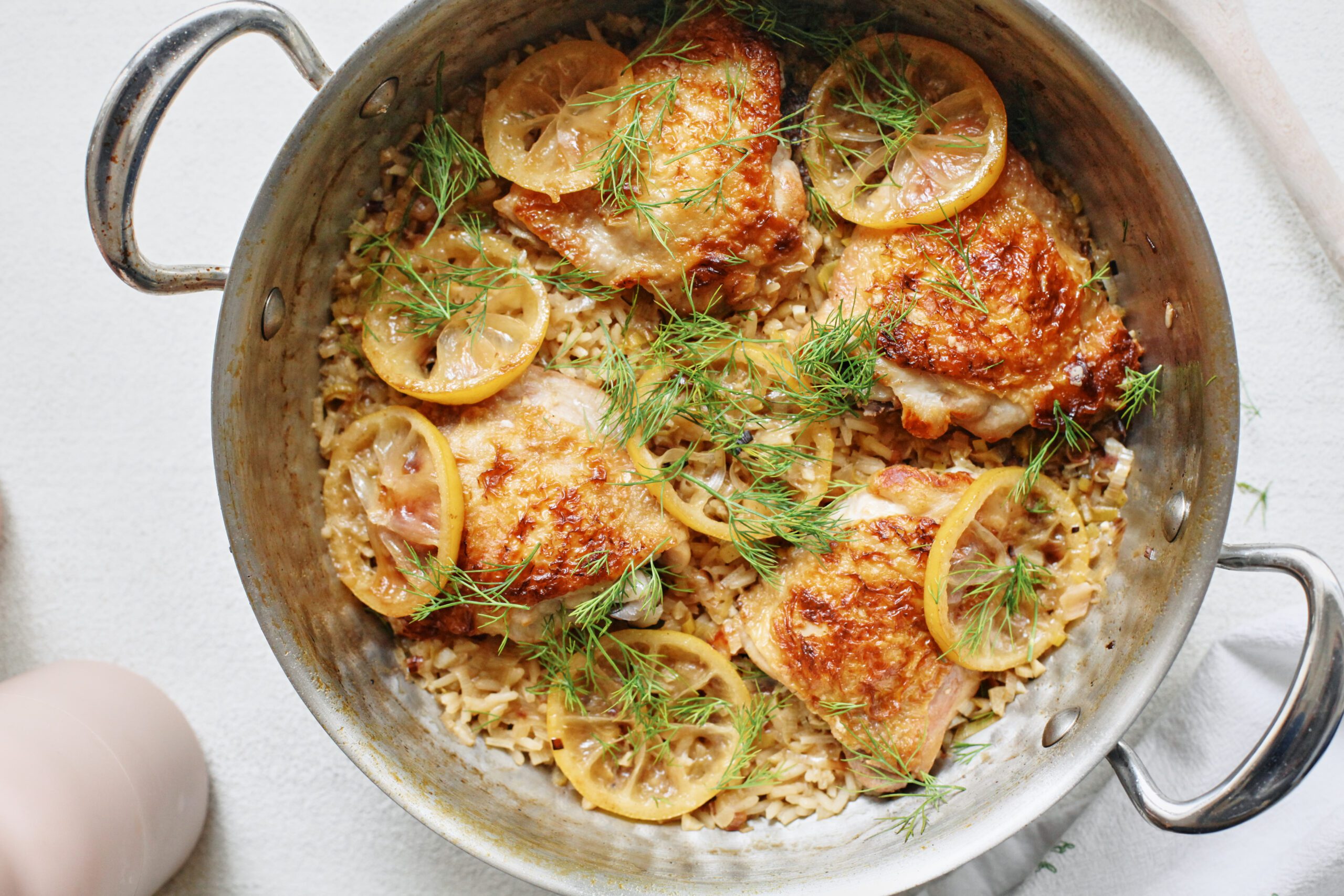
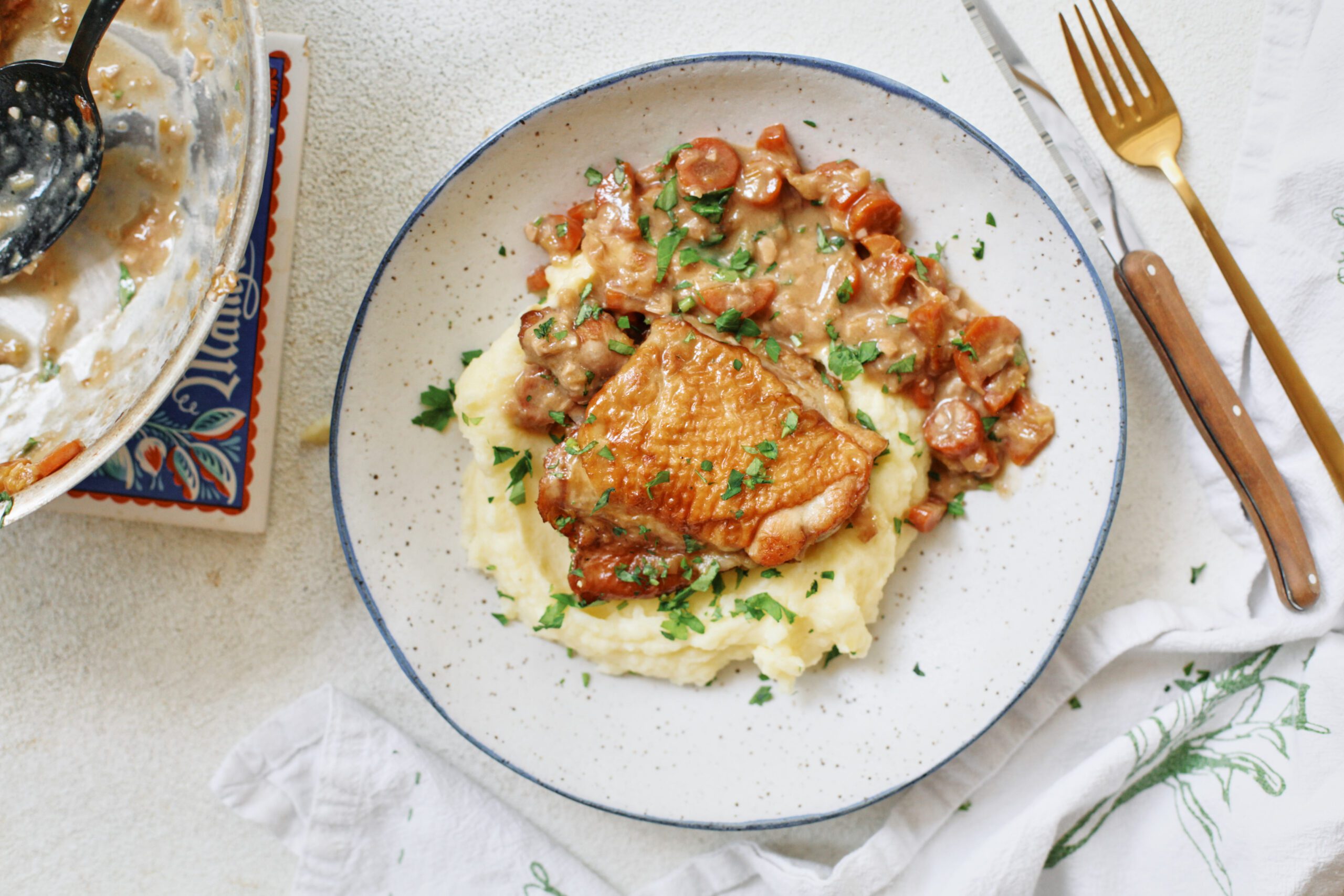
If you’ve ever made classic coq au vin, you know it’s all about red wine, mushrooms, and rich, slow-cooked chicken. This version, Coq au Vin Blanc, skips the mushrooms (my husband isn’t a fan) and leans into white wine instead, which makes it a little lighter but still just as cozy and flavourful. The chicken gets a quick—or longer if you’ve got the time—marinade in wine and herbs to build in tons of flavour before it even hits the pan. From there, we’ll sear it until golden, let it simmer low-and-slow with carrots, leeks, and shallots, then finish the sauce with a swirl of Dijon and some butter.
I know French names can sound intimidating, but when you break them down, they’re often simpler than you think—coq au vin literally just means “rooster in wine.” Aaaaand seeing as how chicken is a lot easier to find than rooster, we are going chicken! Whether you stick with the traditional red wine or switch things up with white, what you end up with is melt-in-your-mouth chicken in a velvety, tangy sauce that’s perfect over creamy mashed potatoes or some crusty French bread. Comforting, impressive, and way easier than it looks. I’m definitely making this in the fall/winter when people come over or during the holidays!
Why You’ll Love this Recipe:
- French classic, simplified: Coq au Vin sounds fancy, but this version breaks it down into approachable steps with everyday ingredients.
- White wine twist: Lighter than the traditional red wine version, but still rich, cozy, and full of flavour.
- Make-ahead friendly: Marinate the chicken up to 24 hours in advance so dinner feels effortless when it’s time to cook.
- The BEST sauce: Some Dijon and butter at the end makes the sauce silky, tangy, and perfect for spooning over mashed potatoes.
Ingredients for Coq au Vin Blanc:
Chicken thighs: Bone-in, skin-on thighs give you the best sear and the most flavour. If you’d rather not use bone-in, I’ve included substitutions later in the blog.
White wine: Any dry white wine works—Sauvignon Blanc, Pinot Grigio, or Chardonnay are all great choices. This forms the base of the marinade and gets reserved to build the sauce. You can also use zero-proof wine if you’d like to keep it alcohol-free.
Fresh thyme + a bay leaf: The seasonings for the chicken marinade. You can use any herbs you like, but I used fresh thyme that I had on hand and a bay leaf for some earthiness.
Salt: Generously season the chicken thighs on both sides after patting dry and before searing.
Olive oil: Just a drizzle to sear the chicken and sauté the veggies.
Shallot, Carrots, and Leek: Honestly the perfect veggie trio for this dish—mild, sweet, and aromatic. They’re also easy to swap if needed: yellow onion for shallot, parsnips for carrots, an extra shallot instead of the leek.
Garlic: A few minced cloves bring big flavour to the sauce.
Chicken stock: Just a little bit of stock to build out the braising liquid along with the white wine. You can also add a bit of stock when reducing the sauce if it gets too thick.
Dijon mustard: Stirred in at the end for tang and brightness that balances the richness.
Butter: Cold butter, stirred in with the Dijon, creates the most velvety, creamy sauce.
Garnish: I love some fresh Italian parsley for some light herbiness and the prettiest colour!
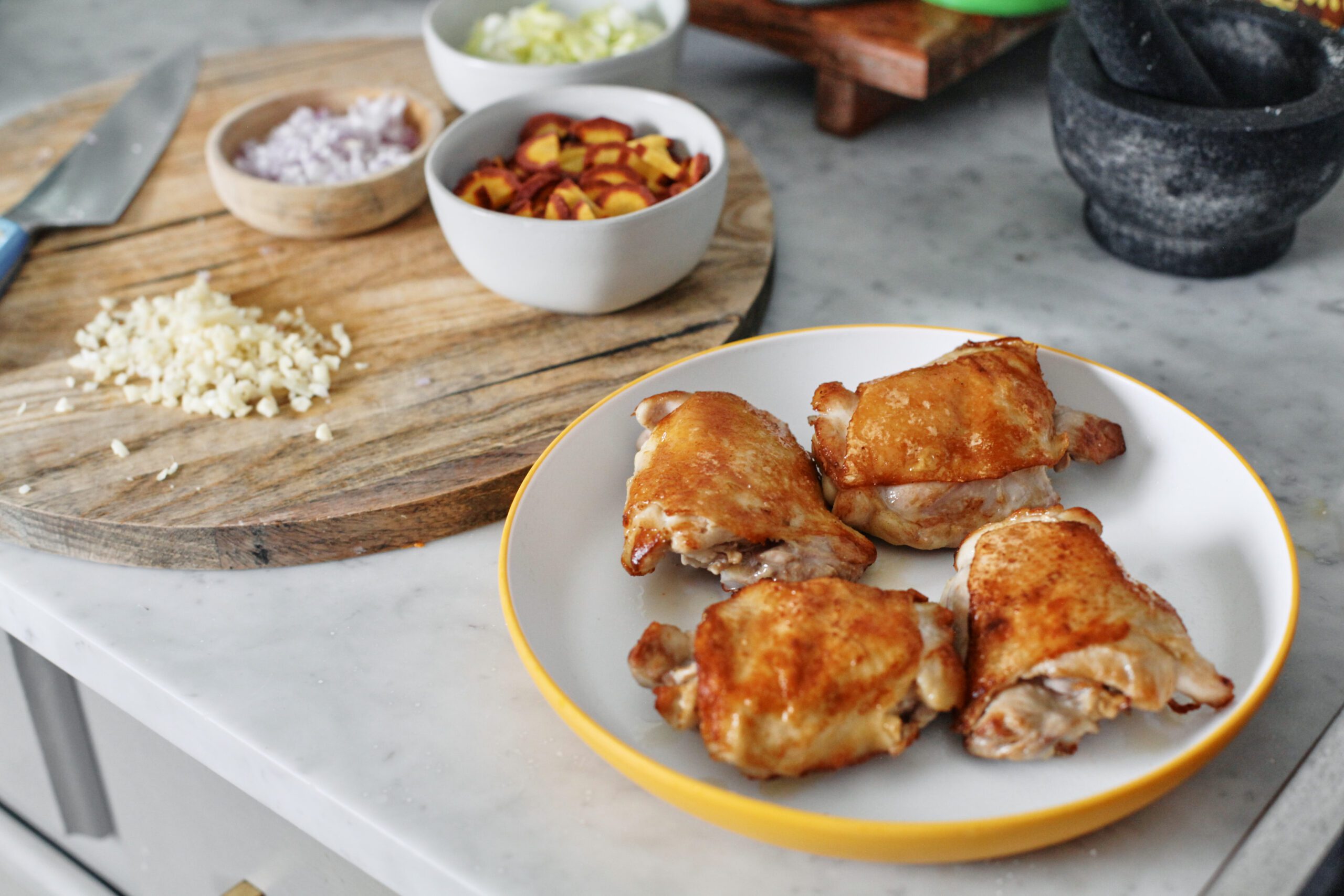
Prep for Coq au Vin Blanc:
- Get your chicken thighs in the marinade up to 24 hours before you’re ready to cook. A 30-minute marinade is enough for delicious chicken, but if you can let it rest overnight in the fridge (in an airtight container), it’ll pick up even more flavour.
- The marinade is as simple as it gets—just white wine (a full 750 ml bottle!) and a handful of herbs. I used fresh thyme and a bay leaf, but you can use whatever you’ve got on hand.
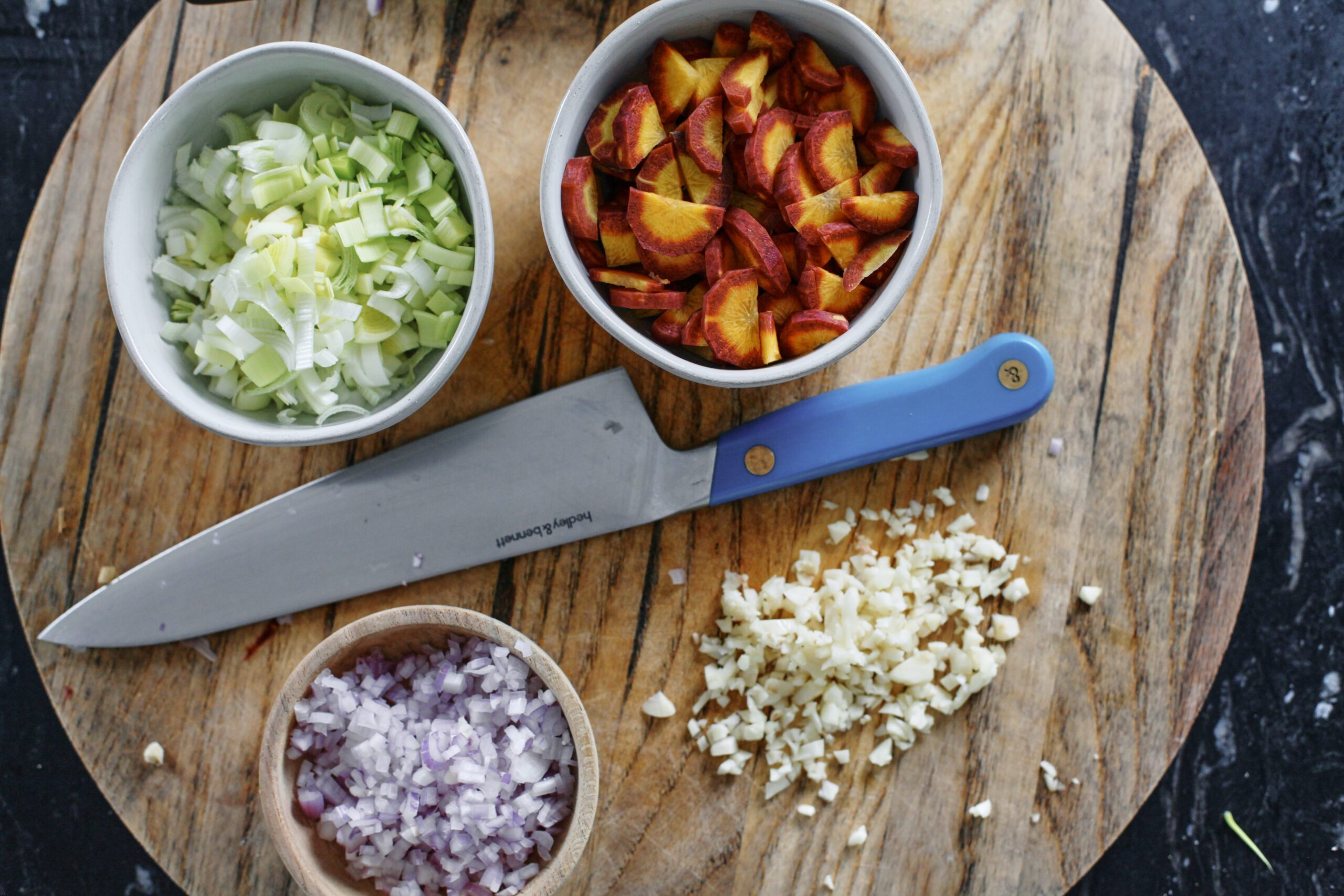
- When it’s almost time to start cooking, chop up the shallot, carrots, and half a leek, and mince the garlic. You can even get this step out of the way a day ahead, just store the prepped veggies in the fridge in an airtight container until you’re ready to go.
How to Make Coq au Vin Blanc.
Step One:
Place the chicken thighs in white wine with a few sprigs of fresh thyme and a bay leaf. Cover and refrigerate for at least 30 minutes, or up to 24 hours.
Step Two:
Remove the chicken from the marinade and pat dry with paper towels. Season both sides generously with salt. Reserve the marinade to use later. You can discard the bay leaf + thyme sprigs at this point.
Step Two:
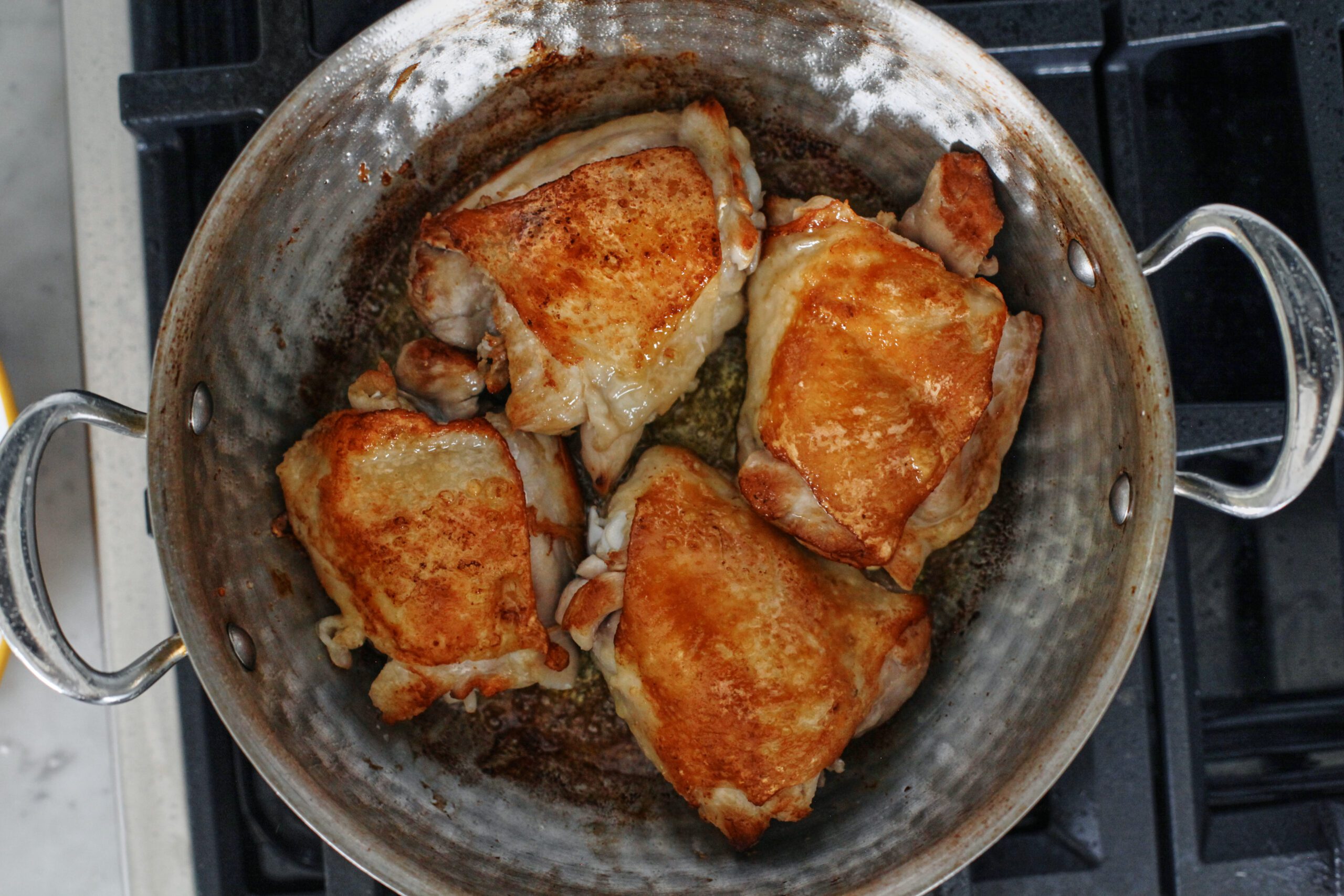
In a Dutch oven or large skillet, heat the olive oil over medium-high. Sear the chicken, skin-side down first, for about 4-5 minutes, until golden. Flip and cook for another 3 minutes. Remove and set aside.
Step Four:
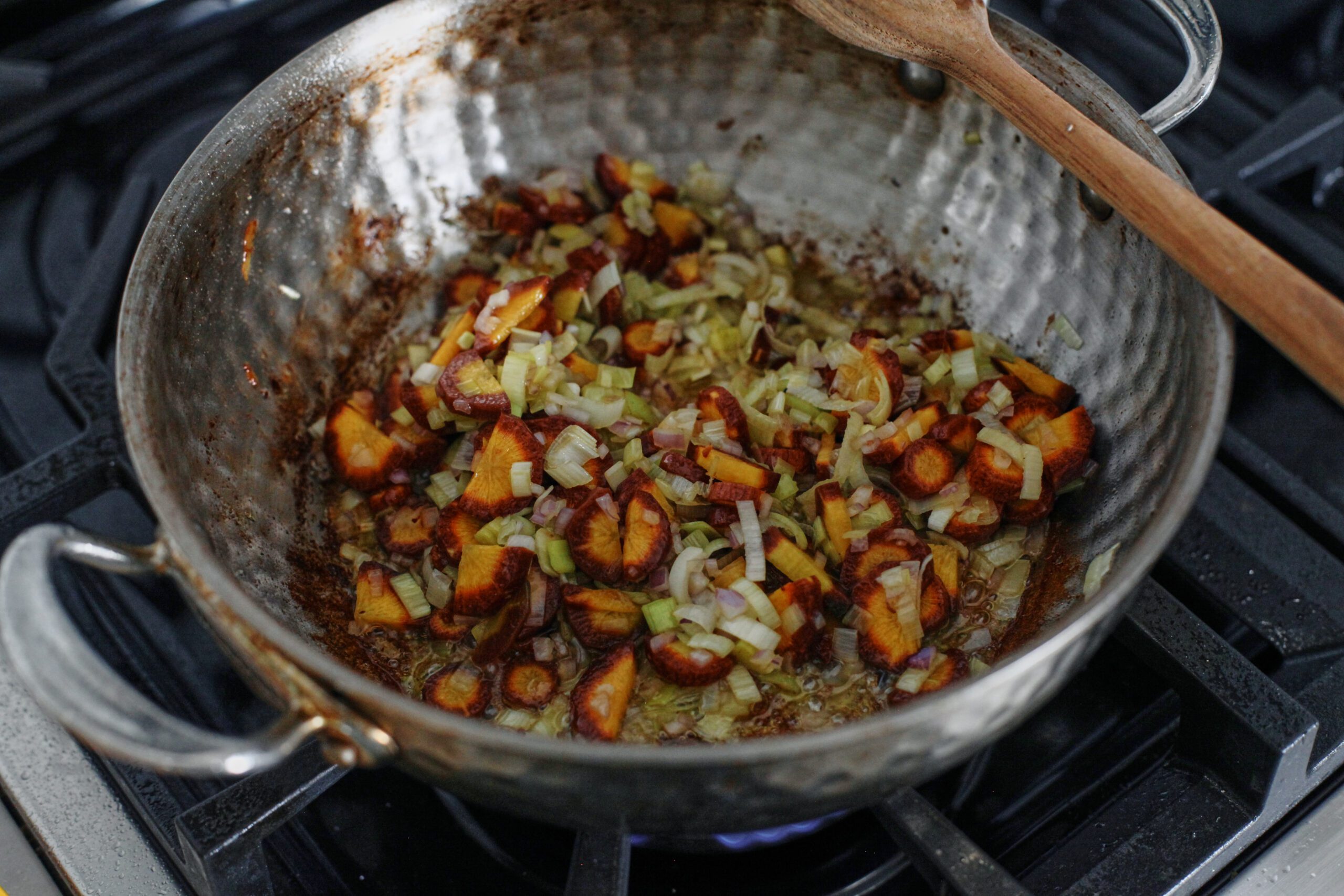
In the same pot, add the shallot, leek, and carrots. Cook for 5–6 minutes until softened and slightly golden. Stir in the garlic and cook for another minute.
Step Five:
Pour the reserved wine marinade into the pot, scraping up any browned bits on the bottom. Return the chicken to the pot, then pour in enough chicken stock to almost cover the chicken, leaving the skin exposed.
Step Six:
Cover and simmer on low for 45 minutes.
Step Seven:
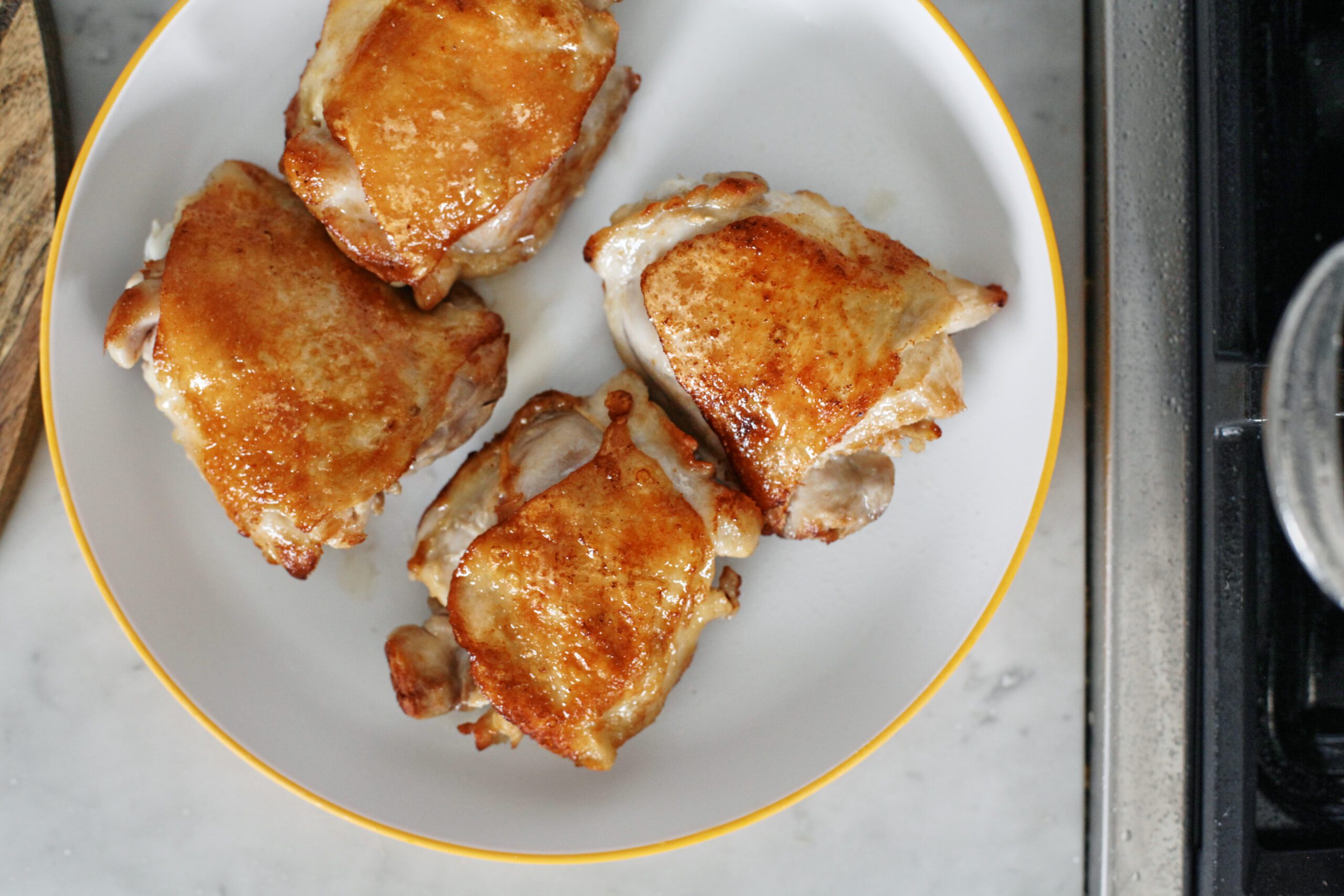
Transfer the chicken to a plate and loosely cover to keep it warm. Let the sauce simmer, partially covered, for 10 minutes to reduce. If it’s reduced too much, add a splash more chicken stock until you reach your desired consistency.
Step Eight:
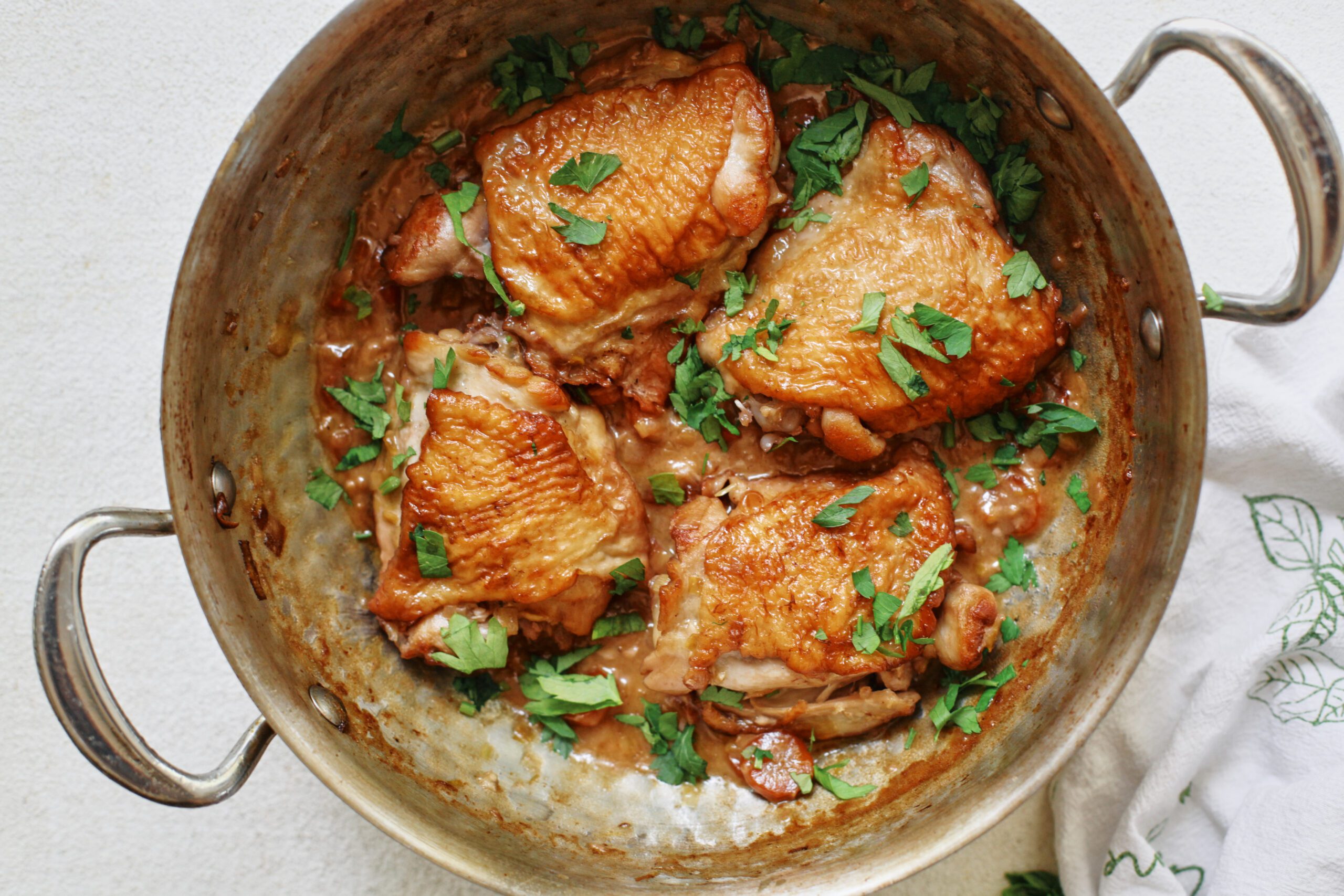
Stir in the Dijon mustard and cold butter to finish the sauce off.
Step Nine:
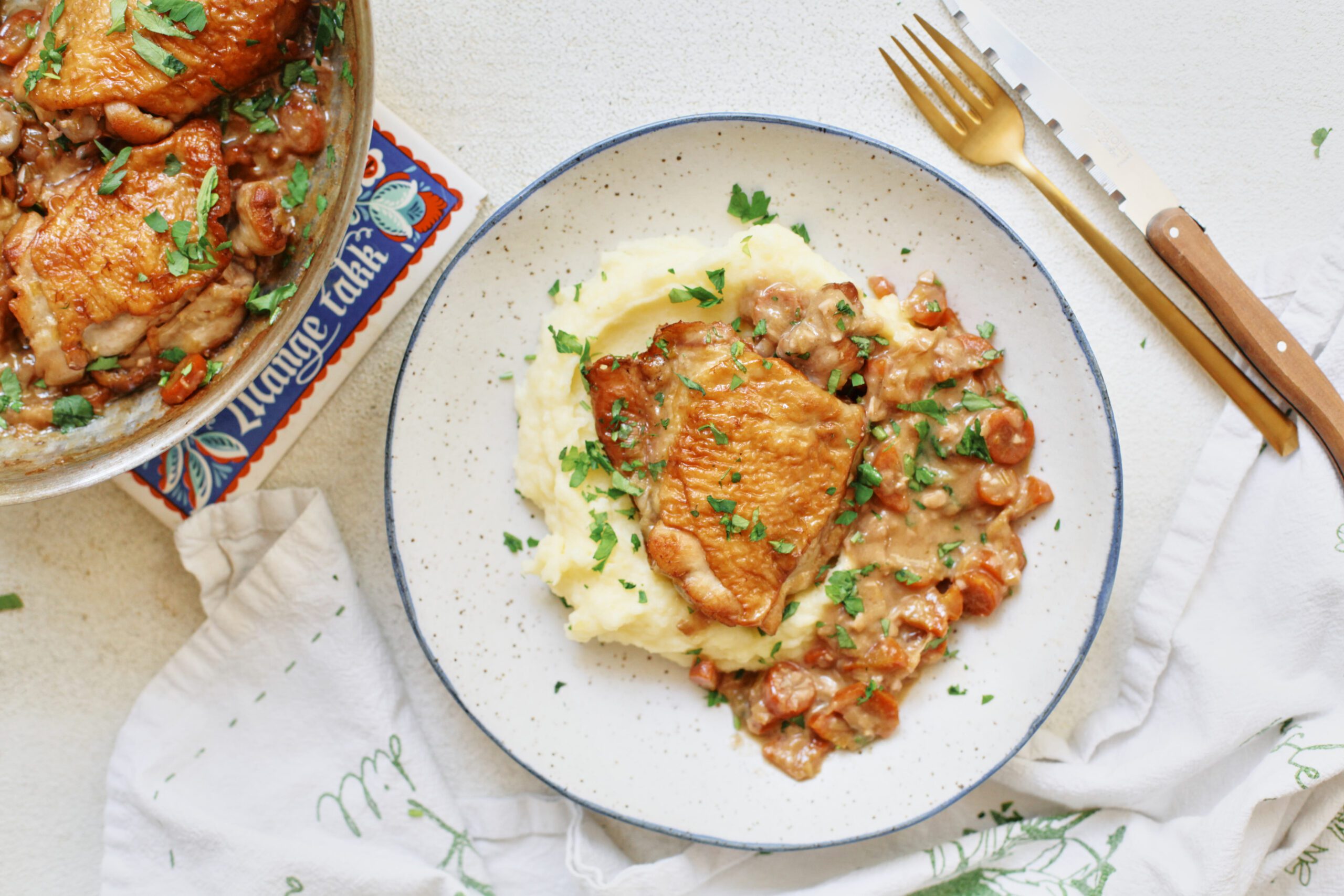
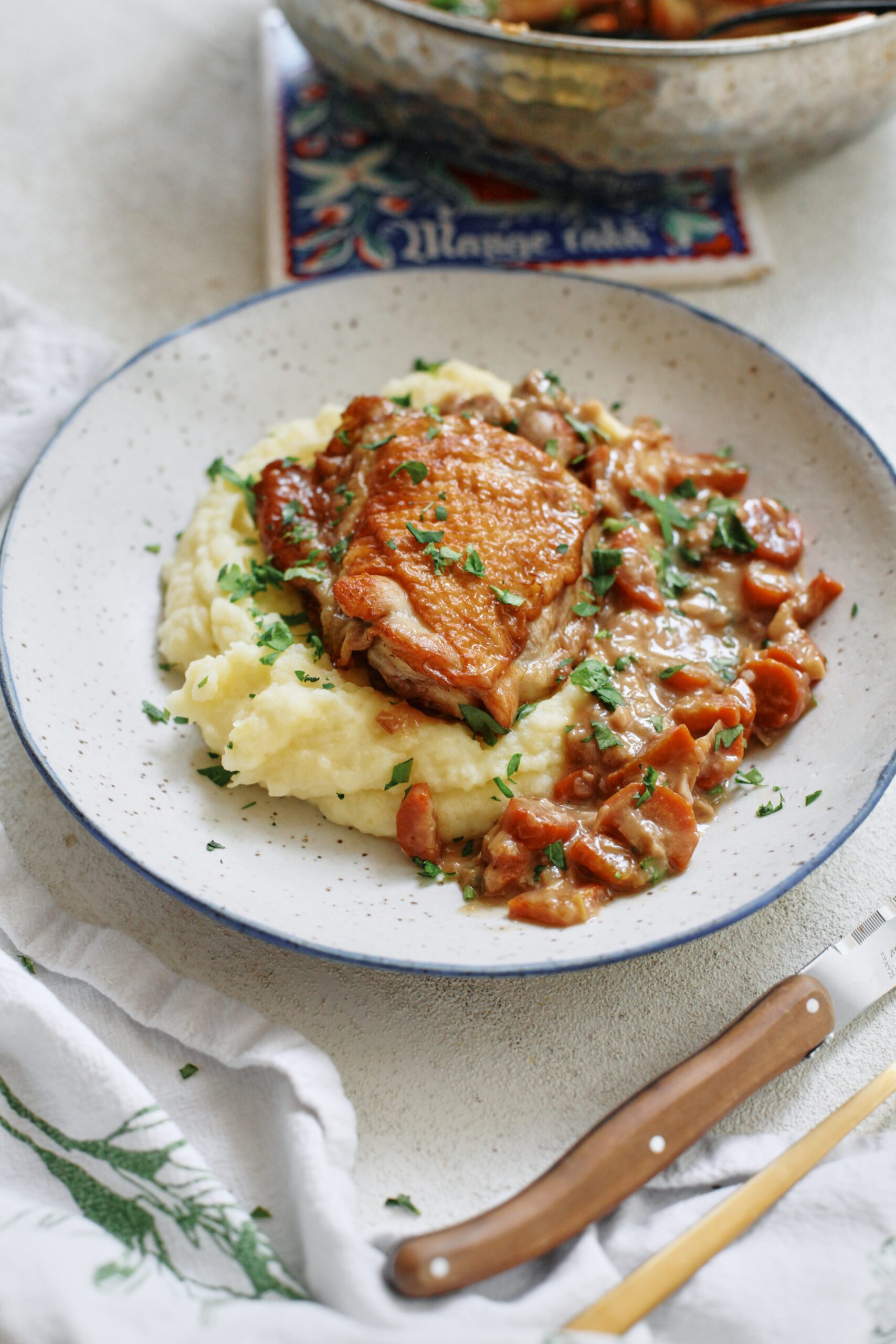
Serve the chicken over some creamy mashed potatoes, then generously spoon the sauce onto each plate. Garnish with some fresh Italian parsley.
Substitutions for Coq au Vin Blanc:
Chicken: I used bone-in, skin-on chicken thighs for the most flavour, but drumsticks or a mix of bone-in pieces work too. You can also use boneless thighs or chicken breasts, just keep an eye on them since they cook faster—start checking for doneness around 25–30 minutes so they don’t dry out.
Wine: Any dry white wine will work here—Sauvignon Blanc, Pinot Grigio, or Chardonnay are all great choices. Avoid anything too sweet. You can also use alcohol-free white wine with great results.
Shallot: If you don’t have a shallot, swap in half a yellow onion for that mild sweetness.
Leek: Swap in another shallot if you want to skip the leek.
Carrots: Parsnips or celery can step in for carrots if that’s what you’ve got on hand.
Dijon: Whole grain mustard or even a touch of spicy brown mustard can work in a pinch.
Butter: To keep it dairy-free, finish the sauce with a drizzle of olive oil instead of butter.
How to store Coq au Vin Blanc:
Fridge: Store any leftovers in an airtight container in the fridge for up to 4 days. The chicken reheats really well—just warm it gently on the stovetop or in the microwave with a splash of chicken stock to loosen the sauce if needed.
Freezer: You can also freeze this dish! Let the chicken and sauce cool completely, then transfer to a freezer-safe container or bag. Freeze for up to 2 months. Thaw in the fridge overnight and reheat gently on the stovetop until warmed through.
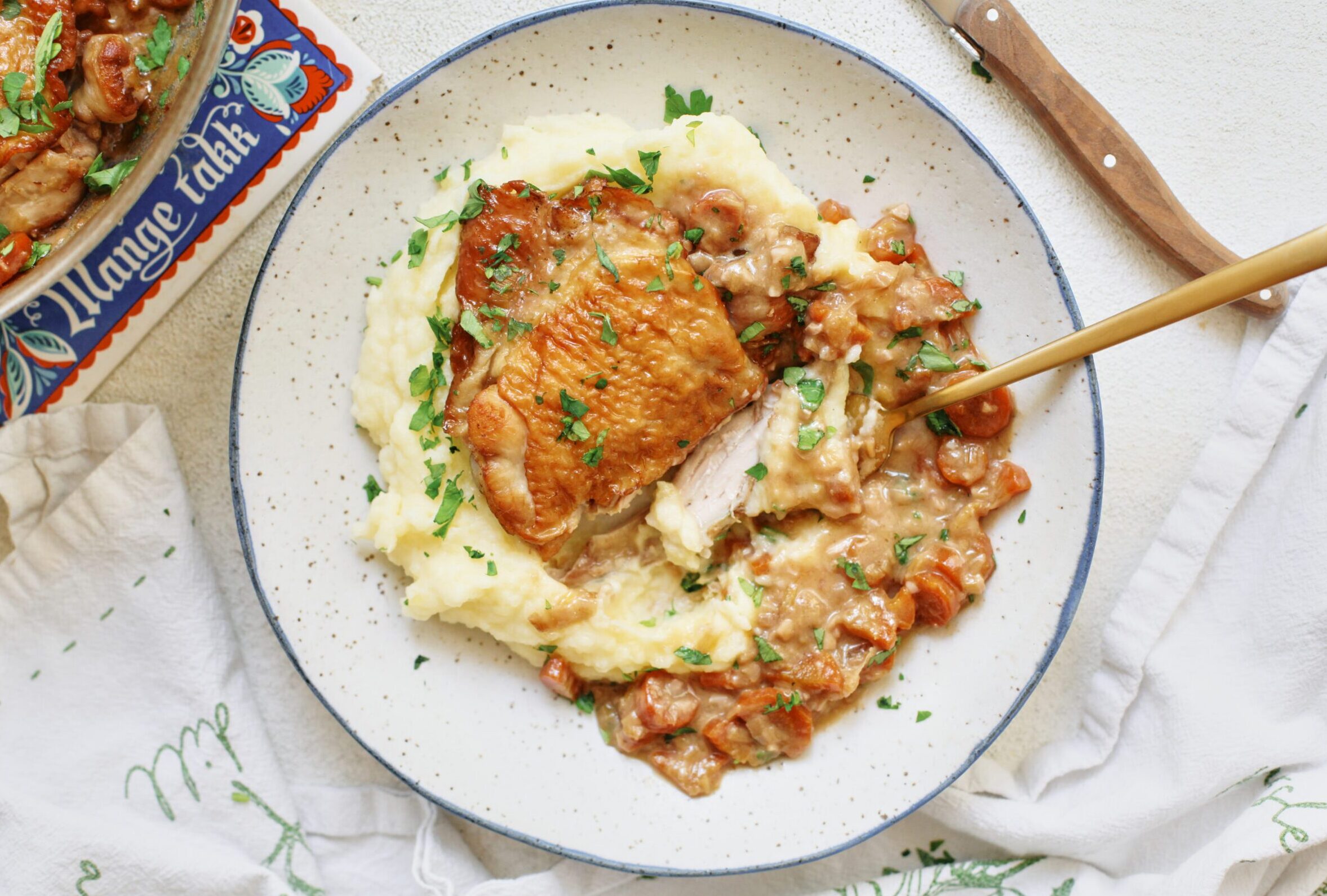
Sometimes it just feels special to make a classic French dish, and I love putting my own spin on them. Tag me on social if you try this one out, @britacooks! xx
Coq au Vin Blanc
Ingredients
- 4 bone-in, skin-on chicken thighs
- 3 cups white wine (750 ml bottle)
- Few sprigs of fresh thyme
- 1 bay leaf
- Salt
- 1 tbsp olive oil
- 1 shallot minced
- 2 carrots chopped
- ½ leek chopped (just the white/light green parts)
- 4 cloves garlic minced
- ~ ½ cup cup chicken stock
- 1 tsp Dijon mustard
- 1 tbsp cold butter cubed
- Garnish: fresh Italian parsley
Instructions
- Place the chicken thighs in white wine with a few sprigs of fresh thyme and a bay leaf. Cover and refrigerate for at least 30 minutes, or up to 24 hours.
- Remove the chicken from the marinade and pat dry with paper towels. Season both sides generously with salt. Reserve the marinade to use later. You can discard the bay leaf + thyme sprigs at this point.
- In a Dutch oven or large skillet, heat the olive oil over medium-high. Sear the chicken, skin-side down first, for about 4-5 minutes, until golden. Flip and cook for another 3 minutes. Remove and set aside.
- In the same pot, add the shallot, leek, and carrots. Cook for 5–6 minutes until softened and slightly golden. Stir in the garlic and cook for another minute.
- Pour the reserved wine marinade into the pot, scraping up any browned bits on the bottom. Return the chicken to the pot, then pour in enough chicken stock to almost cover the chicken, leaving the skin exposed.
- Cover and simmer on low for 45 minutes.
- Transfer the chicken to a plate and loosely cover to keep it warm. Let the sauce simmer, partially covered, for 10 minutes to reduce. If it’s reduced too much, add a splash more chicken stock until you reach your desired consistency.
- Stir in the Dijon mustard and cold butter to finish the sauce off.
- Serve the chicken over some creamy mashed potatoes, then generously spoon the sauce onto each plate. Garnish with some fresh Italian parsley.

Hi I’m Brita!
The recipes you’ll find here are designed to be approachable, yet elevated, and a whole lot of fun to make.
Learn more about me here!